psoriaticarthritis.au · an initiative of BJC Health

Is your joint pain connected to your psoriasis?

Psoriasis is not only a skin condition. In some people the same immune process moves into the joints and tendons, and the early signs are easy to put down to other things:

  • Joint pain with swelling, not just aching
  • Stiffness in the morning that eases as you get moving
  • A finger or toe that swells up like a sausage
  • Heel pain, or pain where tendons attach to bone
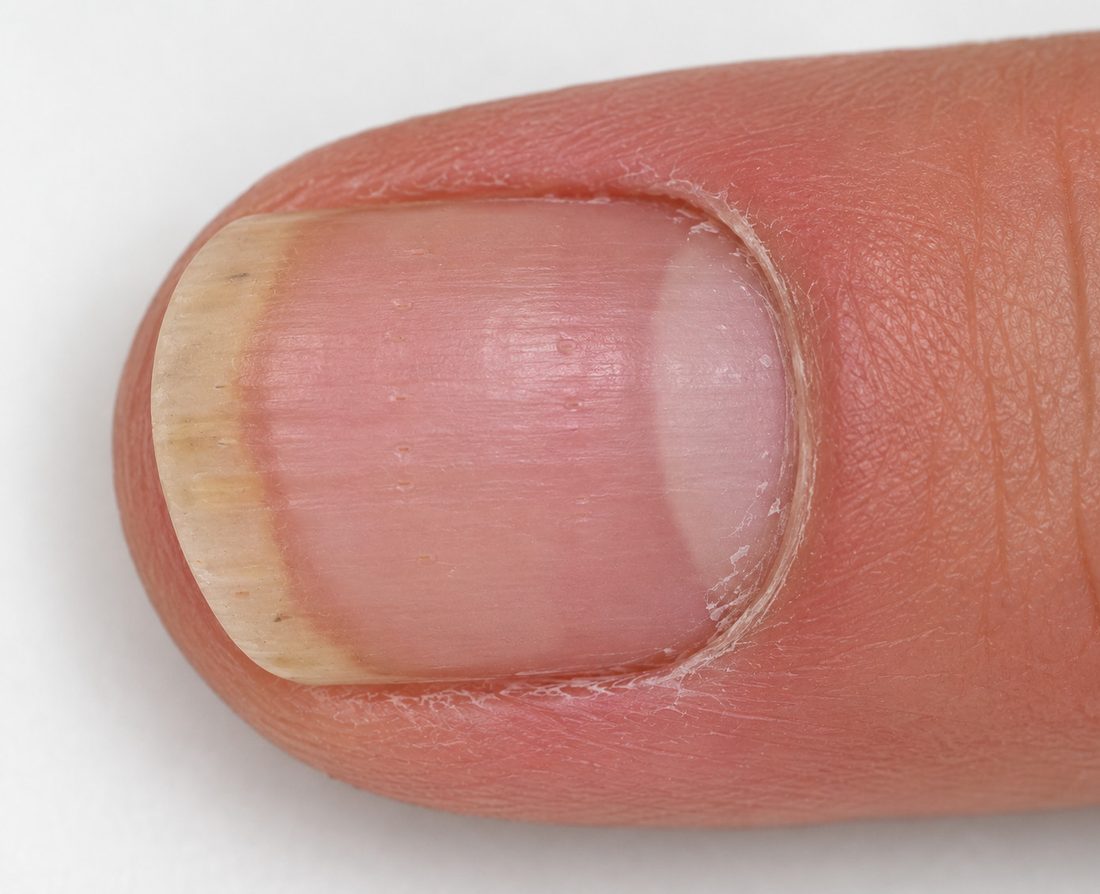
  • Pits, ridges or lifting in your fingernails or toenails

This pattern can point to psoriatic arthritis, a condition many people live with for years before it is recognised. It is worth checking.

Take the 2-minute check

A short set of questions about your skin, nails and joints. Free and anonymous. It will not diagnose you, but it will tell you whether a rheumatology assessment may be worth considering.

Start the check
1 in 3
Up to one in three people with psoriasis develop psoriatic arthritis. Many are never asked about their joints.
The basics

More than skin deep

Psoriatic arthritis happens when the immune system that drives psoriasis also inflames the joints, tendons and the places where tendons attach to bone. It can feel similar to ordinary aches, but the pattern usually gives it away.

Everyday aches and wear-and-tear tend to be...

  • Brought on by activity, injury or overuse
  • Worse with use, better with rest
  • Briefly stiff in the morning, usually under 30 minutes
  • Painful without true joint swelling

Psoriatic arthritis tends to be...

  • Swollen and warm, not just sore
  • Stiff for more than 30 minutes in the morning
  • Better with movement, worse after rest
  • Accompanied by psoriasis, nail changes, sausage-like digits or heel pain
~10 yearsskin usually comes first

In most people the skin comes first, on average about ten years before the joints, so the connection gets missed. Skin severity does not predict joints either: people with a single small patch of psoriasis, or scalp psoriasis they barely think about, can still develop psoriatic arthritis. And in some people, the arthritis arrives before any rash at all. Studies suggest that even a six month delay in diagnosis is linked with worse long-term joint outcomes, which is why recognising the pattern early matters. The quiz takes two minutes and will help you work out whether an assessment is worth considering.

Psoriatic arthritis quiz

Could a rheumatology assessment help?

Ten questions about your skin, nails and joints. It will not diagnose anything. It only helps you work out whether the pattern is worth checking.

Question 1 of 10 about 2 minutes

This quiz was written for this website. It draws on the well-established PEST screening questions used to flag psoriatic arthritis in people with psoriasis, and on the clinical features rheumatologists use when classifying the condition (the CASPAR criteria), covering psoriasis, nail changes, dactylitis, enthesitis, joint and inflammatory back symptoms. It is not a medical assessment and cannot diagnose any condition. Your answers stay on your device and are not sent or stored anywhere.

The bigger picture

One condition, many signs

Because psoriatic arthritis is driven by the immune system, it can show up well beyond the skin. These features can appear before, alongside or after each other, and noticing them helps with reaching a diagnosis.

Skin

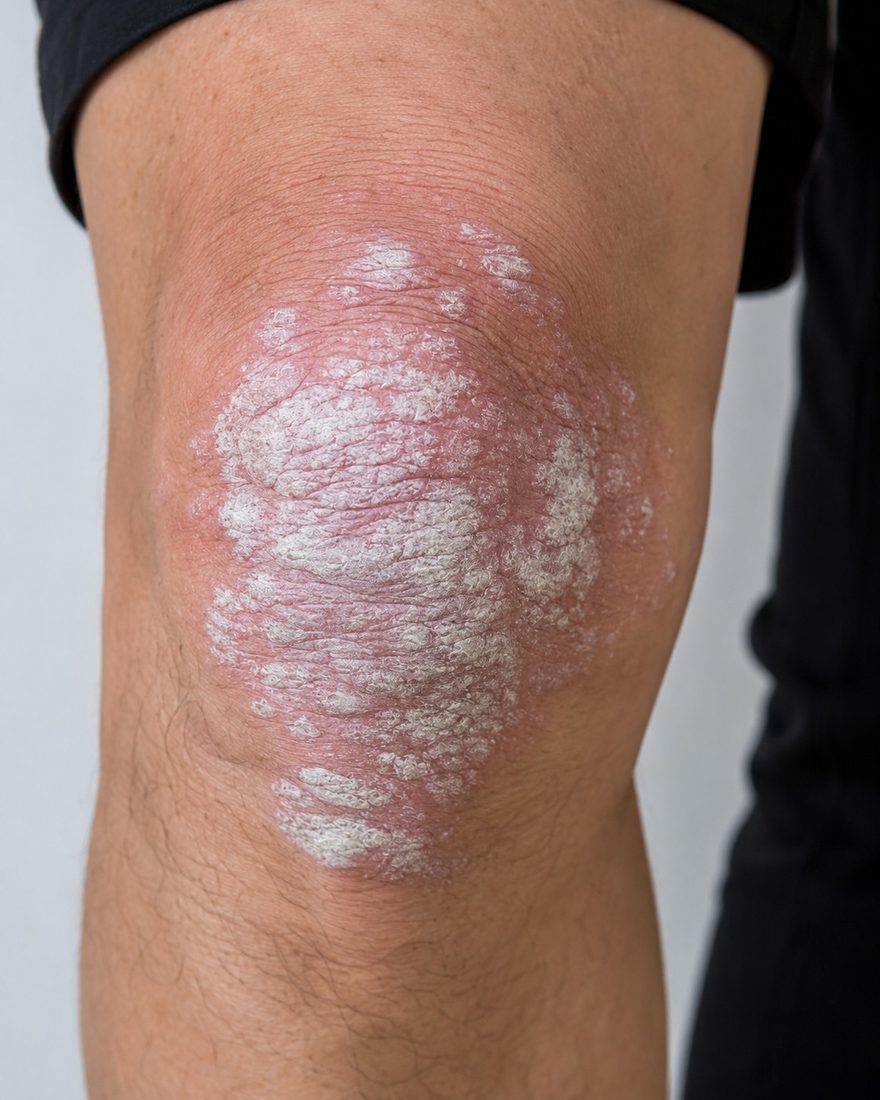
Psoriasis: scaly patches, often on the scalp, elbows or knees, sometimes hidden behind the ears or in skin folds.

Nails

Pitting, ridging or lifting of the nail from its bed. Easy to mistake for a fungal infection.

Fingers & toes

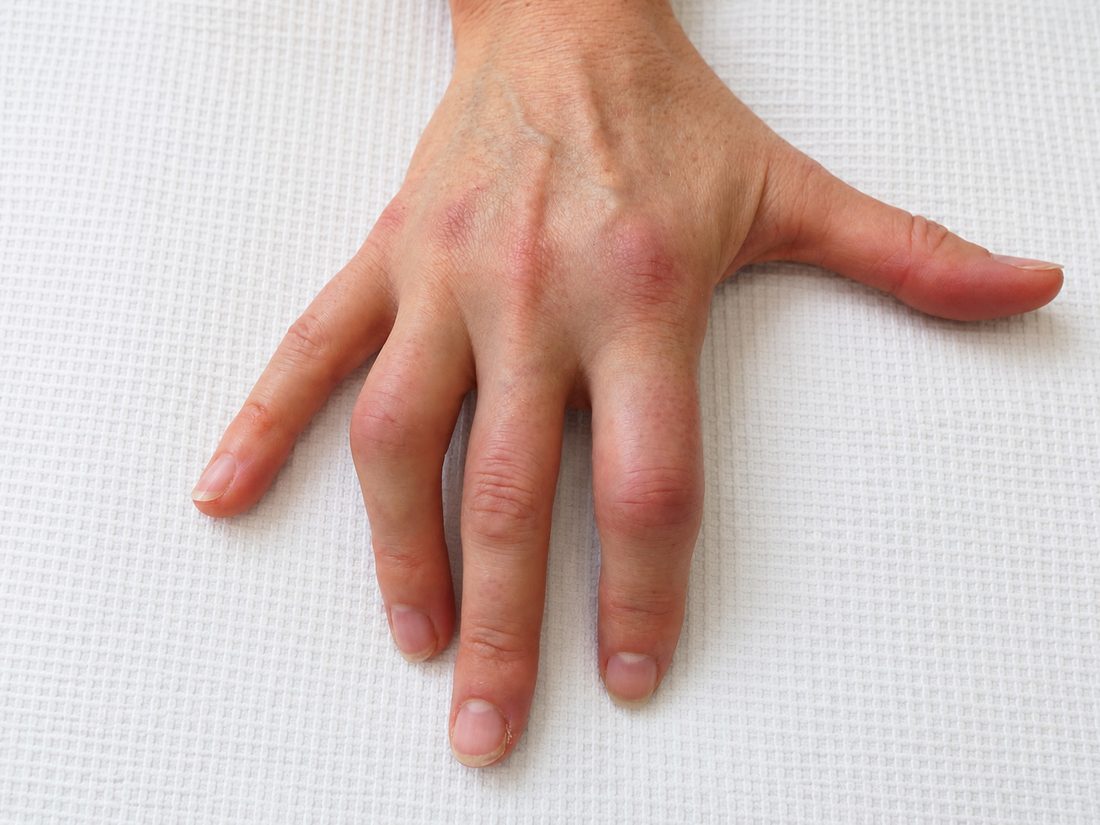
Dactylitis: a whole finger or toe swelling up like a sausage, even without injury.

Heels & tendons

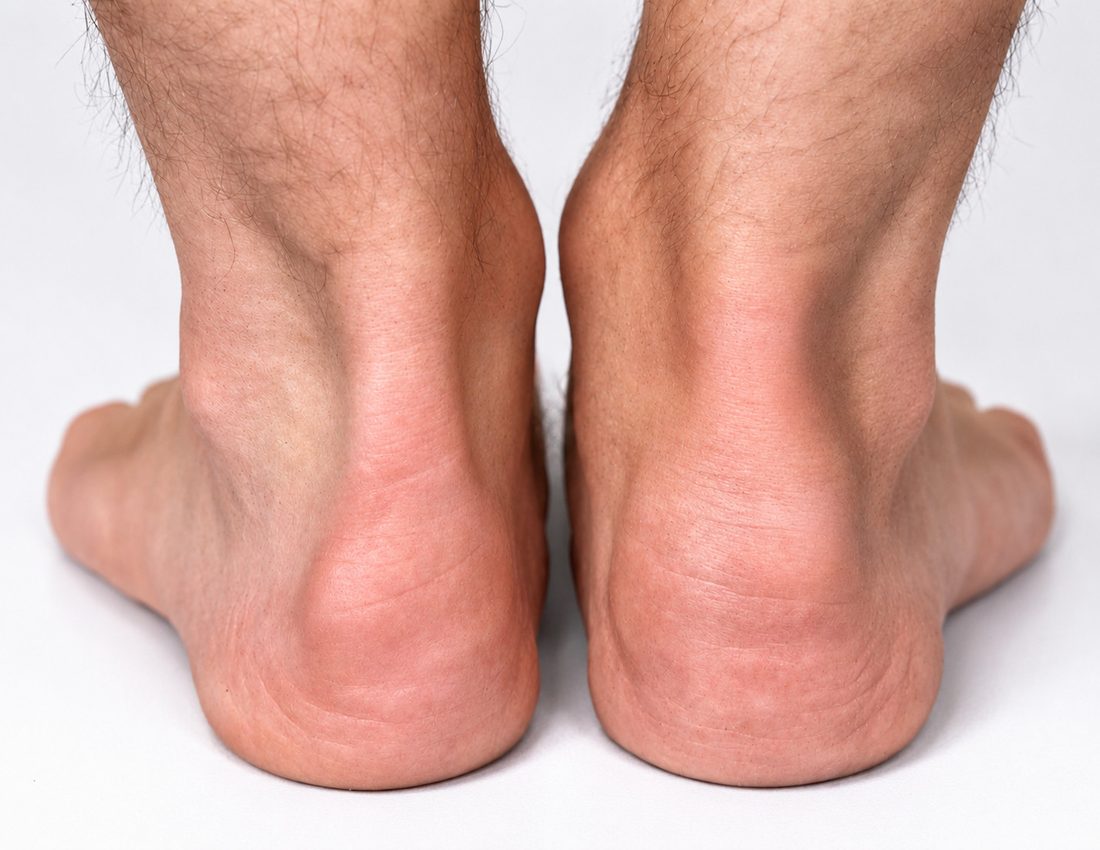
Enthesitis: pain where tendons and ligaments attach to bone, commonly the heel or sole of the foot.

Joints

Pain, swelling and stiffness in any joint: fingers, toes, knees, ankles, wrists. Often asymmetric.

Back

Inflammatory back pain: stiffness worst in the morning, easing with movement, often starting before 45. More at spondyloarthritis.au

Eyes

Uveitis: a painful, red, light-sensitive eye that comes on quickly and needs prompt attention.

Whole-body health

Fatigue, and higher rates of heart and metabolic conditions, worth monitoring with your team.

Noticing several of these together? Take the quiz or mention them to your GP.

What these signs can look like

Real examples help people recognise the pattern in themselves. These are clinical images of common signs of psoriatic arthritis.
Why it is worth checking

Recognising it early changes what happens next

The delay to diagnosis is not just frustrating. It is time during which the condition may be active and untreated. Getting an answer earlier opens up options that work best when they are started sooner rather than later.

Treatment can begin

Once psoriatic arthritis is recognised, there are effective treatments. These generally work best when inflammation is addressed early, rather than after years of untreated symptoms.

Movement can be guided

Exercise is a core part of managing psoriatic arthritis. Knowing what you are dealing with means a physiotherapist can guide the right kind of movement, instead of you guessing or avoiding activity.

The whole picture gets seen

A diagnosis prompts attention to the things that travel with psoriatic arthritis, such as eye inflammation, and heart and metabolic health, so they can be watched for and looked after.

An earlier diagnosis will not guarantee any particular outcome, and everyone's experience is different. But it does give you and your doctors the chance to act while there is the most to gain. If the quiz suggested your pattern is worth checking, the sensible next step is a conversation with your GP or a rheumatology assessment.

How it is treated

Psoriatic arthritis is very treatable

There is no single fix, and treatment is always tailored to the person. But there is a clear, well-established approach, and it usually combines movement with medicines that calm the underlying inflammation. The aim is to control symptoms, protect the joints, and often help the skin at the same time.

01

Anti-inflammatory medicines

NSAIDs (non-steroidal anti-inflammatory drugs) can help the pain and stiffness, and a corticosteroid injection can settle a particularly inflamed joint or tendon while longer-term treatment takes effect.

Used safely, these mean the lowest effective dose for the shortest time needed, taken with your doctor's guidance and regular review. Always check with your GP or pharmacist before starting them.

02

Movement and physiotherapy

Exercise is a cornerstone of managing psoriatic arthritis, not an optional extra. Regular strengthening, mobility work and paced activity protect joint function and help with fatigue, and a physiotherapist can tailor a program safely, including for sore heels and tendons.

See our physiotherapy options →

03

Disease-modifying and specialised medicines

Medicines such as methotrexate are often the first long-term treatment, dampening the overactive immune response. When more is needed, a rheumatologist can prescribe targeted treatments that block specific drivers of inflammation, including biologic medicines such as TNF, IL-17 and IL-23 inhibitors, and targeted tablets such as TYK-2 and JAK inhibitors.

Many of these treat the skin and the joints together. They are prescribed and monitored by a rheumatologist, and in Australia are subsidised through the PBS for people who meet the eligibility criteria.

The right combination is decided with your rheumatologist, based on which parts of your body are affected, how active the condition is and what matters to you. This page is general information and is not a recommendation about any specific medicine.
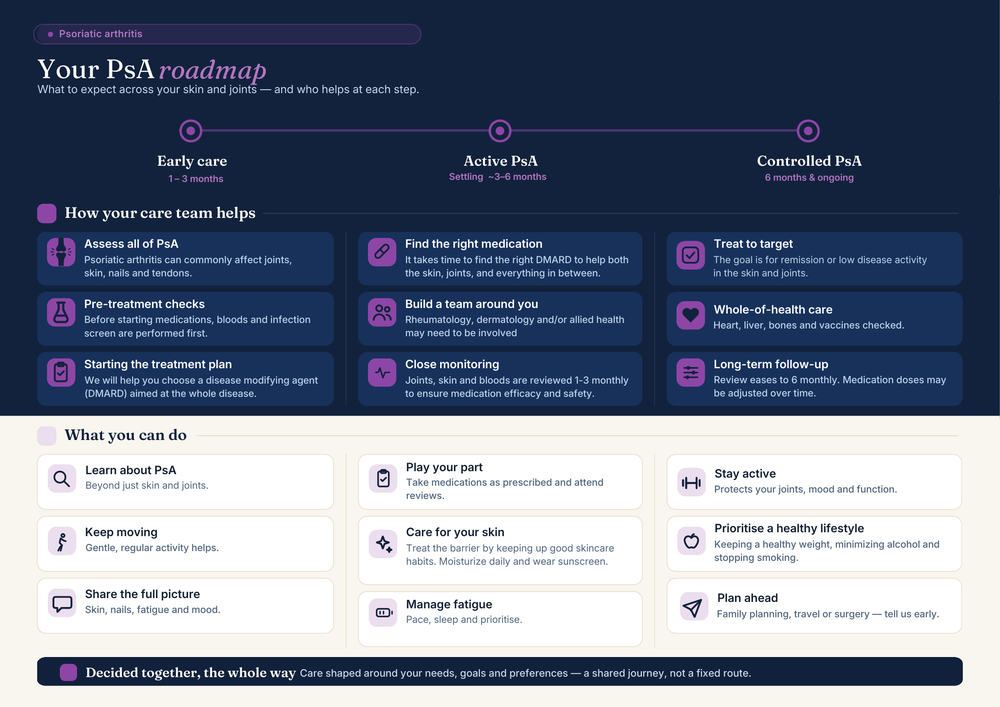
Your PsA roadmap: a one-page guide showing what to expect across your skin and joints from early care to controlled disease, how your care team helps at each step, and what you can do yourself.
On one page

What happens after a diagnosis, on one page

If psoriatic arthritis is diagnosed, this free one-page guide maps out what typically comes next: getting answers, settling symptoms and staying active for the long term. It shows how your care team helps at each step and what you can do yourself, with movement at the heart of it.

Download the PsA roadmap (free PDF)
Movement is medicine

Moving well is part of the treatment

In psoriatic arthritis, the right movement is not just helpful, it is part of the plan. A physiotherapist who understands the condition can assess how it is affecting you, then guide exercise that keeps you strong without stirring up inflamed joints and tendons. At BJC Health, physiotherapists work in the same team as our rheumatologists.

A program built around your condition

Strength, mobility and paced aerobic exercise tailored to which joints and tendons are affected, your disease activity and your starting point. You learn what to do, how to do it safely, and how to keep it going.

Help for heels, tendons and hands

Enthesitis and dactylitis need specific handling, not generic exercise sheets. Our team also includes podiatry and hand therapy for footwear, orthotics, splinting and joint protection.

Exercise physiology

Supervised strength and conditioning for people who want structure and coaching, from newly diagnosed through to long-established disease.

Weight and eating well

Excess weight increases inflammation and reduces the chance of responding well to some medicines, so maintaining a healthy weight is a practical, worthwhile step.

Book a physiotherapy appointment

You do not need a rheumatology diagnosis to see one of our physiotherapists. A GP referral may allow a Medicare rebate under some care plans.

You do not have to wait alone

Join BJC Connect, free

Whether you are still working out what is going on, waiting on an appointment, or already living with psoriatic arthritis, BJC Connect is a free online community with practical information and real support. It is open to anyone in Australia, whether or not you are a BJC Health patient.

Live events every fortnight with our clinicians and guests, on topics that matter to people with rheumatic conditions.

A library of recordings, ebooks, videos and recipes you can work through in your own time.

Practical, everyday information on movement, eating well and managing life with a long-term condition.

A community of people who get it, so you are not piecing things together on your own.

Create a free account

Free for anyone in Australia. No cost, no obligation.

Common questions

Questions people ask us

Could this be psoriatic arthritis?

Psoriatic arthritis usually involves joint pain with swelling or stiffness, often alongside psoriasis, nail changes, a swollen finger or toe, or heel pain. The skin can come years before the joints, and sometimes after. Only a doctor can diagnose it. If joint symptoms have lasted more than a few weeks, see your GP and ask whether a rheumatology referral is appropriate. The quiz above is a starting point, not a diagnosis.

My psoriasis is mild. Can I still get psoriatic arthritis?

Yes. How bad the skin is does not predict what happens in the joints. People with a small patch of psoriasis, scalp-only psoriasis, or even psoriasis that cleared years ago can still develop psoriatic arthritis. A family history of psoriasis counts too, as arthritis occasionally arrives before any rash.

Is there a blood test for psoriatic arthritis?

No single test can diagnose it. Rheumatologists diagnose psoriatic arthritis from your history and examination, supported by blood tests that measure inflammation and help exclude other types of arthritis, and imaging such as ultrasound, X-ray or MRI. Unlike rheumatoid arthritis, the typical antibody tests are usually negative in psoriatic arthritis, so a "normal" blood test does not rule it out.

Do I need a GP referral to see a rheumatologist?

You can book directly, but you will need a referral from your GP (or another specialist) to claim a Medicare rebate.

What happens at a first rheumatology appointment?

Your rheumatologist will take a detailed history, examine your joints, skin and nails, and review any tests you have had. You may need blood tests or imaging. If a diagnosis is made, your rheumatologist will talk through the options with you, and treatment usually starts promptly, as early treatment gives the best long-term results.

Can exercise really help?

Yes. Movement is a core part of managing psoriatic arthritis, not an optional extra. Guided exercise protects joint function, eases stiffness and helps with fatigue, and it is safe when built up sensibly. A physiotherapist who understands the condition can tailor it to you.

What is psoriatic arthritis, in one line?

It is an inflammatory condition in which the immune system that drives psoriasis also attacks the joints, tendons and the places where tendons attach to bone, and it is very treatable once recognised.

General information only, not personal medical advice.

Take one step today

You do not need to sort everything out at once. See a rheumatologist, get moving with the right support, or join a community that understands. Each one moves you forward.